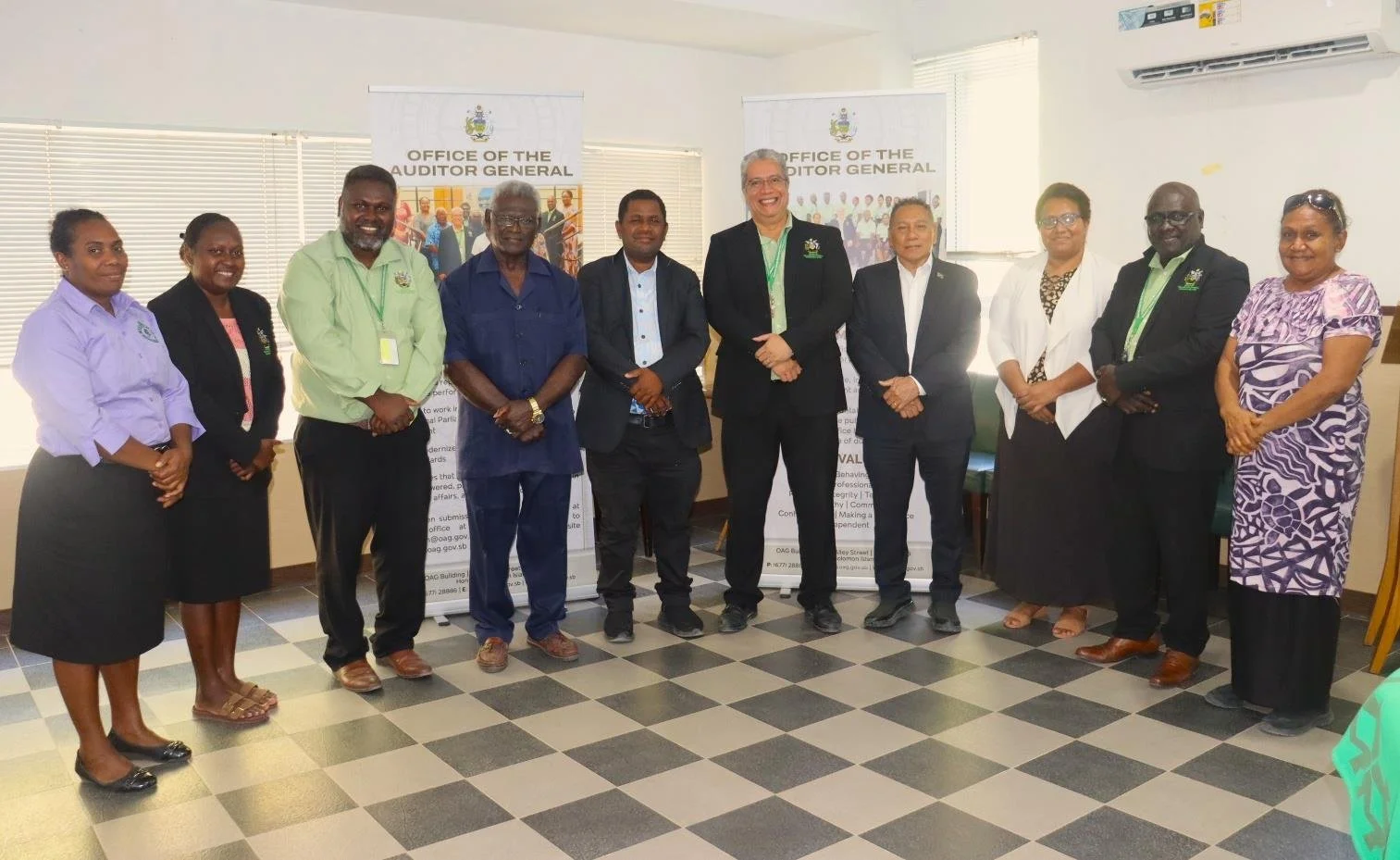
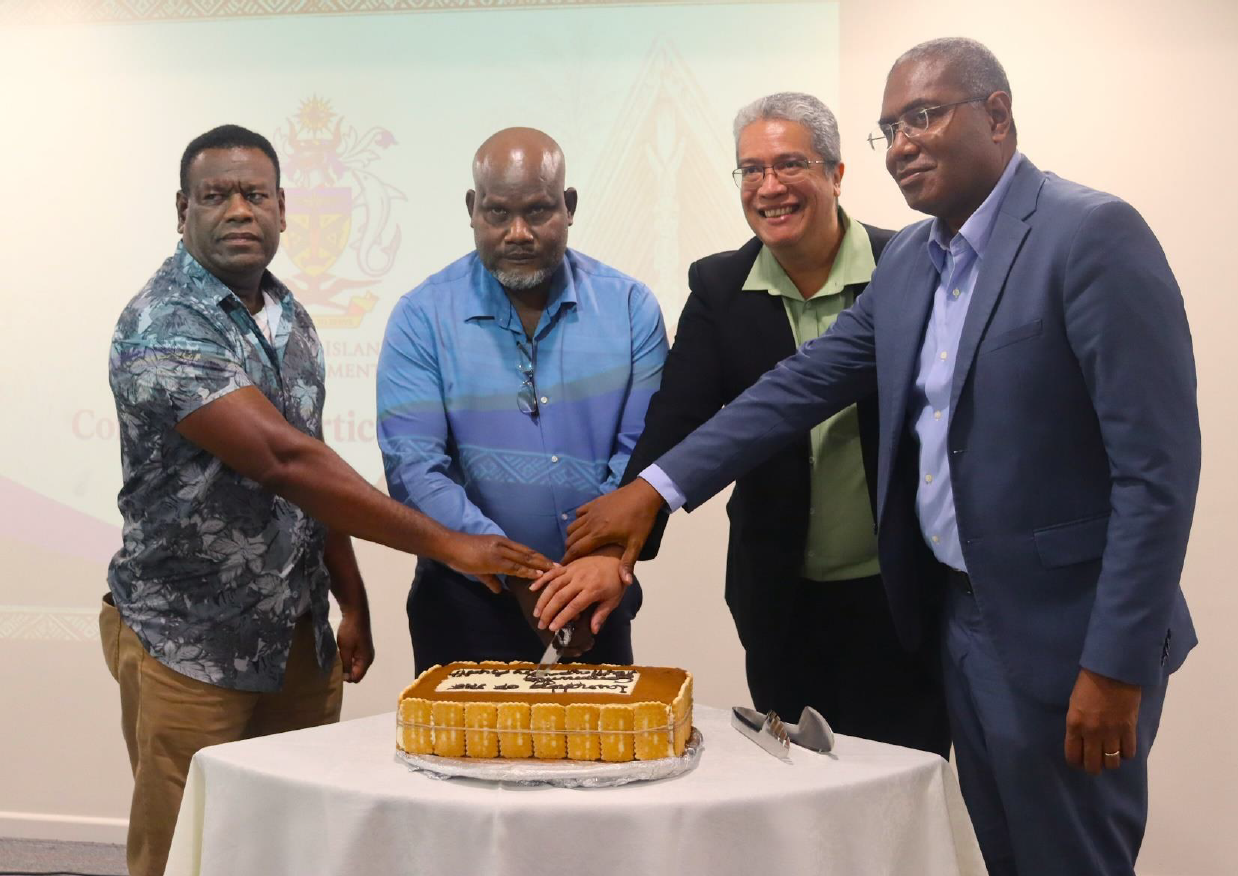
The Office of the Auditor General (OAG), has officially launched the Community Participatory Audit (CPA), a strategic audit approach that looks into the expenditure of Constituency Development Funds (CDF), administered by the Ministry of Rural Development.
This is the first time for the constituency funds to be audited using this approach, which was made possible under the recently enacted Constituency Development Funds Act 2023. The Community Participatory Audit of CDF involves community members in the formal audit process, in particular, data collection and analysis, and supporting making recommendations, alongside auditors of the Office of the Auditor General.
OAG hopes to conduct audits in all 50 constituencies across Solomon Islands, with a pilot project already underway in North Guadalcanal Constituency, to be followed by East Are Are Constituency. The two constituencies voluntarily offered to have their RCDF expenditure for 2024/2025 audited, under the new approach. In addition, the CPA allows for Parliament Members, Constituency Development Offices and communities through their Constituency Offices, to call for audits into the CDF.
Speaking at the launch, Minister for Rural Development, the Hon. MP for North Malaita, Hon. Daniel Waneoroa, emphasized that the law allows for proper governance and efficiency of the Rural Constituency Development Funds.
“This new approach sends a clear message to every Constituency Development Office (CDO) and officer across the country. Under the 2023 Act, CDO officers are contracted public officers who must act with professionalism, prudence and transparency.
“These audits will highlight the necessity of maintaining proper registers and accounts as required by the Ministry and will be useful for my Ministry in improving the effective delivery of CDF in the future.
“I see this approach as empowerment through compliance. This is not about "catching" people; it is about providing CDOs with the feedback they need to improve decision-making and better serve their people. It’s with this mindset that I have indicated to OAG my interest for our government to look at providing budget allocation through our monitoring and evaluation of all constituencies.
‘I am hopeful that through this engagement of our accountability agencies that both our people and our international partners will have confidence that public funds are being used for the people in line with our laws,” said Minister Waneoroa.
Also speaking at the launch, Auditor General David Dennis said they are excited to be rolling out the new approach alongside local communities.
“Today, we stand at a critical juncture in our nation’s journey toward transparent governance in the use of constituency development funds. We are hopeful that with this new initiative community members can not only have current audit reports but can also participate in the Government’s accountability processes.
“Our goal is to ensure that every dollar of public money is used in the way the law requires and is in line with the purpose for which it was approved. Today, we are sharing how we are transforming the way we audit the Constituency Development Funds through a powerful new methodology called Community Participatory Audits.
“To audit effectively, we cannot remain confined to our offices in Honiara. Supreme Audit Institutions around the world have found that the most impactful audits occur when they engage with Civil Society Organizations and the citizens themselves.” said Auditor General Dennis.
Meanwhile UNDP Pacific Team Leader -Effective Governance and Inclusive Growth Mr Rustam Pulatov said UNDP is pleased to support OAG.
“UNDP is pleased to have supported the Office of the Auditor General in this work, including through technical assistance to develop a combined compliance and performance audit approach, and by supporting the pilot of the Community Participatory Audit. Today’s launch is not the end of the process. The real value of this report will be realised through follow-up actions through the implementation of recommendations, and through continued dialogue among the OAG, Government, Parliament, civil society, and communities,” said Mr Pulatov.
World Bank Operations Officer, Alison Ofotalau, expressed that World Bank is proud to be working with the OAG on the new community approach.
“The Community Participatory Audit approach, pioneered by the OAG's Performance Audit team, is one of the most innovative elements of the partnership between World Bank and the Office of the Auditor General - translating technical audit work into citizen-friendly insights that communities can act on.
“The World Bank is proud to support this initiative through the Building Capacity in Statistics and Audit (CAPSA) Project, which has been partnering with the OAG since 2022 to strengthen audit quality, modernize audit methodology, and improve public communication of audit findings,” said Ms Ofotalau.
The CPA has been developed in line with international auditing standards, and our national laws, such as the Public Finance and Management Act 2013, Public Finance Audit Act 1978 and the Constituency Development Funds Act 2023, with support from UNDP and World Bank.