Facebook Events Contact us Learning Platform

ANNOUNCEMENTS

Annual Report now available

The PASAI Annual Report 2025–26, along with copies of past reports, is now available on the Annual Reports page. It was approved by members at PASAI’s Annual General Meeting on 27 August 2026.

Financial statements for the year ending 30 June 2026 are also appended to the report.

Q4 report now available

We have just published our fourth quarterly report for the 2025–26 financial year.

Current and past reports are available on our Quarterly reports page.

27th PASAI Congress Communiqué


27th Pacific Association of Supreme Audit Institutions (PASAI) Congress
Republic of Naoero
25 to 27 August 2026

 PASAI Communiqué

  1. PASAI held its 27th Congress in the Republic of Naoero from 25 to 27 August 2026, hosted by the Department of Audit for Naoero. The theme for the Congress was “Sustainable audits for sustainable islands”. In addition to the host nation Naoero, representatives of 20 PASAI member national, state or territory government audit offices attended from American Samoa, the Australian National Audit Office, Australian Capital Territory (Australia), New South Wales (Australia), the Cook Islands, the Federated States of Micronesia (FSM) Kosrae, FSM Pohnpei, Fiji, Guam, Kiribati, the Marshall Islands, New Caledonia, New Zealand, Palau, Samoa, Solomon Islands, Tonga, Tuvalu and Vanuatu.

    Representatives attended from the Government of Naoero, the High Commission of Australia, INTOSAI Development Initiative (IDI), the Audit Board of the Republic of Indonesia and the New Zealand Ministry of Foreign Affairs and Trade (MFAT).

    Sustainable audits for sustainable islands

  2. SAI heads appreciated the hospitality of the President and the opening address delivered by the Acting President of Naoero, the Honourable Charmaine Scotty MP, in which she highlighted the importance of government agencies embracing technology in responsible ways and in the interests of the public they serve.

  3. SAI heads were encouraged by the sentiments in the keynote address by the Deputy Speaker of the Parliament of Naoero, the Honourable Isabela Dageago MP, that SAIs promote integrity, provide assurance that public resources are managed responsibly and help governments deliver better services.

  4. SAI heads appreciated the acknowledgement by the INTOSAI Secretary General and President of the Austrian Court of Audit, Dr Margit Kraker, of PASAI’s value as a regional organisation. SAI heads noted increasingly global opportunities to exchange experiences and identify innovative approaches.

  5. SAI heads acknowledged their regional strength of working collectively and resolved to explore further opportunities to share insights with each other to lift their offices’ ability to address emerging issues and enhance their sustainability.

  6. SAI heads appreciated the contributions made by international and regional counterparts who participated in panel discussions by remote online attendance and/or by providing pre-recorded videos.

    Auditing the use of AI and ethical use of AI in auditing

  7. SAI heads noted the enormous potential of artificial intelligence (AI) to transform how SAIs deliver their mandates.

  8. SAI heads concurred that public sector agencies, including SAIs, must strategically manage the risks of using AI.

  9. SAI heads committed to lead by example in the responsible adoption and use of AI, noting that appropriate policies and staff training are essential for SAIs to maintain security and credibility.

    Engaging meaningfully with the Legislature

  10. SAI heads noted that SAIs and legislatures have integral roles in the accountability chain. SAIs provide independent assurance on public entity reporting and performance while legislative bodies use audit work to scrutinise the use of public funds and follow up on government implementation of audit recommendations.

  11. SAI heads noted that SAIs need to maintain neutrality and independence while making themselves accessible and useful to legislative committee members. Increasing legislators’ understanding of their scrutiny role and building of their financial literacy benefits the people they serve.

  12. SAI heads noted that legislative scrutiny is weakened by inactive oversight committees and the inability to publish reports until they have been tabled. Legislation that empowers SAIs to publish reports and mandates government response timeframes strengthens the Legislature’s ability to hold audited entities and the Government to account. 

  13. SAI heads noted that among legislators there may be low financial literacy and misconceptions about the role of the SAI and oversight committees. SAIs may be able to play a role in capacity building through new member inductions, briefings, study tours and advocating for the strengthening or clarification of standing orders.

    Engaging meaningfully with communities, citizens and others

  14. SAI heads noted that public engagement with audit work can amplify pressure to act on recommendations, giving additional incentives to SAIs to make audit findings easily understandable and accessible to citizens through media releases, non-technical summaries, videos and recommendation trackers.

  15. SAI heads noted that citizen engagement may include community participation to strengthen audit relevance and impact. After taking into account experiences in other regions, SAI heads noted the use of appropriate safeguards so that citizens and CSOs can help identify issues and collect information while carefully managing awareness of roles, confidentiality, independence, conflicts of interest, training and safety.

  16. SAI heads noted that citizen-centric reports, active communication and engagement with non-government stakeholders can promote public trust in a SAI and its role in the accountability system. Engagement also helps citizens understand that in most models, a SAI’s role is to provide assurance and recommendations, not prosecution or direct enforcement when issues are identified. 

    Auditing responses to climate change

  17. SAI heads noted that climate change risks impact many government functions. Effective responses require strong governance, collaboration between agencies, and attention to long-term outcomes that are difficult to measure but critical for accountability.

  18. SAI heads noted that the recent global cooperative performance audit in which 9 SAIs from the PASAI region participated, found government actions to adapt to climate change had the common issues of a lack of cross-agency coordination, insufficient long-term planning and weak monitoring. Pacific Island states urgently need access to further expertise and financing for actionable programs.

  19. SAI heads noted the benefits of working together on cooperative audits include increased audit impact and strengthened technical skills for participants. PASAI will continue to use this model to support SAIs in planning and conducting audits that they would otherwise lack the resources to do alone. 

    Auditing achievement of SDGs

  20. SAI heads noted the United Nations 17 Sustainable Development Goals (SDGs) provide SAIs a broad framework to undertake audits that contribute to assessing how effectively governments are progressing towards achieving their 2030 Agenda commitments.

  21. SAI heads noted the IDI–PASAI supported cooperative audit on how governments are addressing skilled worker shortages involves 9 Pacific Island SAIs auditing SDGs linked to health, education and food security outcomes. The regional approach will help address challenges that include limited performance audit and stakeholder engagement capacity. 

    SAI peer-to-peer (twinning) partnerships

  22. SAI heads witnessed the signing of a refreshed memorandum of understanding (MOU) between the SAI heads of the Australian Capital Territory and Kiribati. 

  23. SAI heads acknowledged the value of ongoing twinning partnerships and a desire to extend such arrangements where possible.

    PASAI general business

  24. SAI heads noted the report of the PASAI Chief Executive on 2025–26 program activities and the Secretariat’s planned areas of focus for 2026–27. 

  25. SAI heads noted the various forms of capacity development offered by the IDI as conveyed by its Deputy Director-General, Archana Shirsat. IDI and PASAI mutually acknowledged the close collaboration which has been successfully established and a desire to continue working together for the benefit of PASAI members.

  26. SAI heads acknowledged the key messages that came out of the recent UNDESA Symposium and the IDI Global Summit for SAIs in Small Island Developing States. SAI heads also acknowledged the value of the A-SEAT audit management tool and noted the need for funding support to implement the broader rollout of the tool in the region.

  27. SAI heads acknowledged the service of the SAI Head of New Caledonia, Florence Bonnafoux, for her role as Chair of the Governing Board since the last Congress in August 2025. In that time she actively participated in the comprehensive review of PASAI’s Charter and governance code, and drove the increase in transparency of Governing Board decisions with member SAIs.

  28. SAI heads confirmed SAI Fiji to represent the Melanesian sub-region on the Governing Board and thanked David Dennis, the former SAI Head of Solomon Islands, for his service on the Board.

  29. SAI heads thanked Imase Taai Kaunatu, the former SAI Head of Tuvalu, for her service representing the Polynesian sub-region on the Governing Board. SAI heads confirmed SAI Cook Islands to represent the Polynesian sub-region on the Governing Board, noting the value of the continued service on the Board of the former Outgoing Chair, Desmond Wildin.

  30. SAI heads confirmed SAI Guam to continue representing the Micronesian sub-region on the Governing Board and SAI Australia to continue representing the ‘Other’ sub-region on the Governing Board.

  31. SAI heads expressed their gratitude to the SAI Head of Naoero, his staff and the relevant local authorities for their generous hospitality in making such excellent arrangements to host the Congress.

  32. SAI heads expressed their gratitude for the funding support provided by PASAI’s core development partners for its programs and acknowledged the ongoing commitment from MFAT and the Australian Department of Foreign Affairs and Trade.

    Host of the next PASAI Congress

  33. SAI heads supported the offer of SAI Solomon Islands to host the 28th PASAI Congress in 2027. 

Republic of Naoero
27 August 2026

Two weeks to go for IFPP competition

An international competition, an initiative of the Professional Standards Committee (PSC), aims to promote knowledge and the practical application of the INTOSAI Framework of Professional Pronouncements (IFPP), with registrations open until 31 July 2026.

Participation is open to staff members from INTOSAI member institutions (national-level and affiliate members, such as Guam and the Marshall Islands).

Top-ranking participants will receive awards and distinguished international recognition across the entire INTOSAI community.

A multiple-choice online exam will test entrants’ knowledge about the theoretical content and the practical application of the IFPP, identifying the top-scoring candidates from each INTOSAI region (such as PASAI) as well as the highest-scoring participants worldwide.

Complete the online form to register. For more details about the competition, visit the official website.

New training pathways available to Pacific SAI staff on PASAI’s Learning Platform

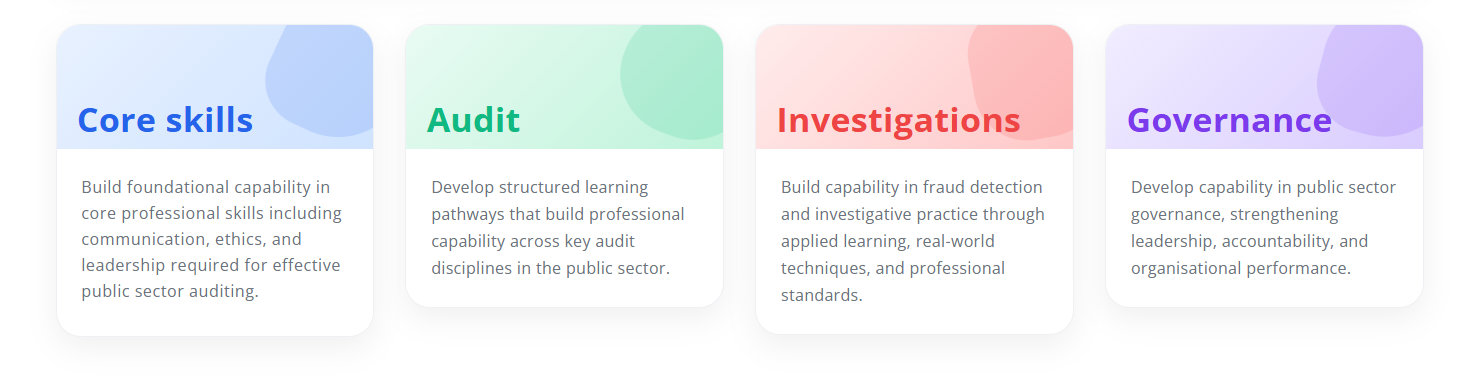
PASAI has created a comprehensive, competency-based training pathways for the varied professional development needs of its member SAIs. From today, there is new content on PASAI’s Learning Platform, a fresh look and a different way of navigating the site. Training resources are available through training pathways covering core skills, audit, investigations and governance. 

Where relevant, new content is structured from a foundational to an advanced level.

The structure of the training pathways makes it easy for SAI staff to learn and develop capability as they progress throughout their careers, and enables them to comply with ISSAI 150, the international standard on auditor competence.

Much of the content available from today relates to the financial and performance audit streams, drawing on the expertise of developed SAIs. PASAI will be adding more content in these and the other areas over the coming year.

Join the AI & Tech in Audit Challenge

This global initiative brings together SAI auditors with experts in artificial intelligence (AI) and technology to co-create practical solutions for applying AI and technology in public audit.

The initiative provides a safe space for learning, experimentation, mentorship and collaboration, with a strong focus on inclusion, ethics and real-world application in diverse SAI contexts.

Building on IDI’s commitment to innovation and digital transformation, the AI & Tech in Audit Challenge responds to the growing need for SAIs—particularly in developing contexts—to explore, adapt, and implement emerging technologies. It recognises that successful innovation requires partnerships, diverse expertise and opportunities to learn by doing.

The initiative also includes awards for winning solutions and support for implementing selected innovations in participating SAIs.

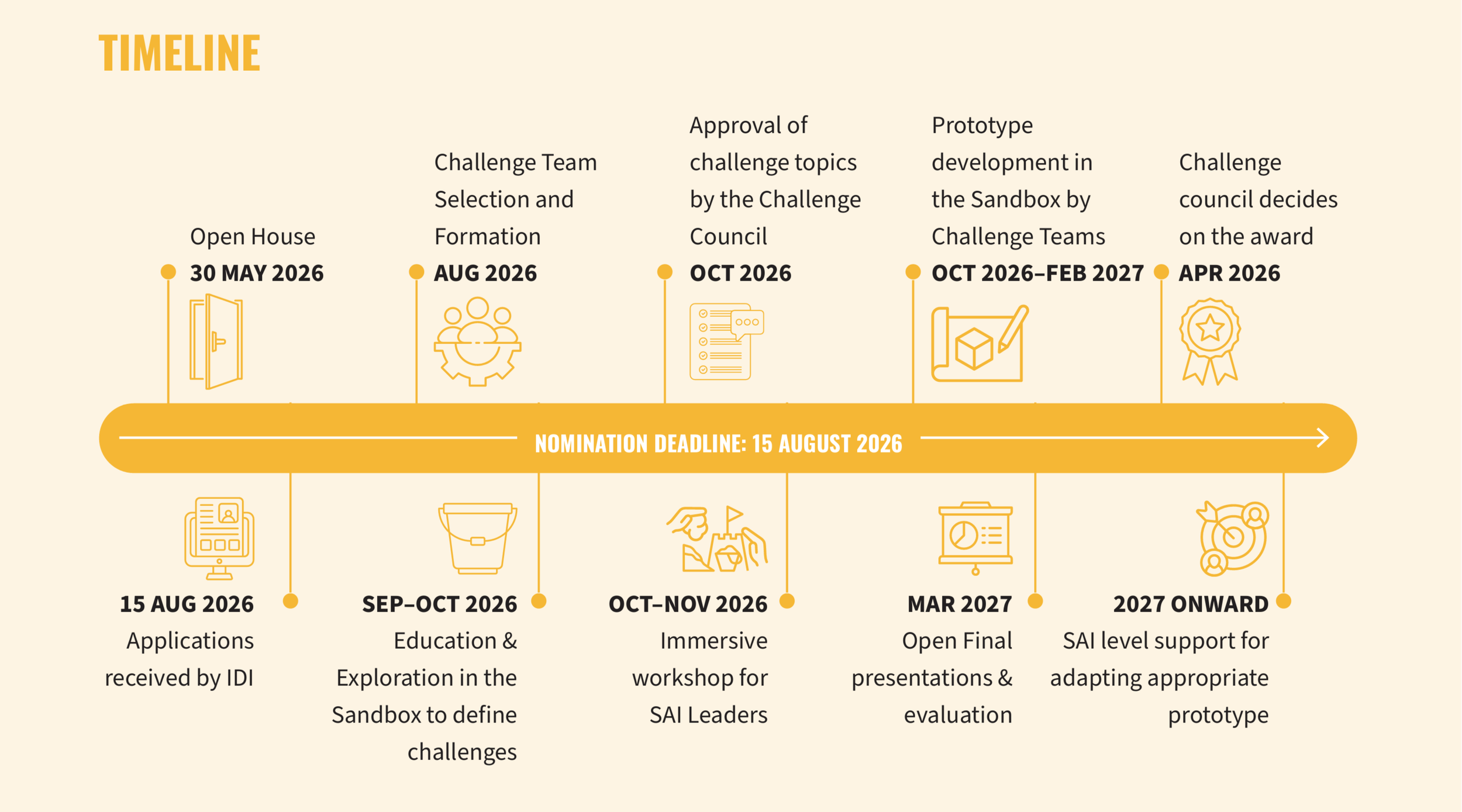
Where relevant, SAI heads should nominate interested staff by 15 August 2026.

More details about the Challenge are in IDI’s announcement.

Navigating gift giving in the Pacific public service

The Samoa Public Service Commission will lead the first ‘Share Learn Connect’ session for 2026 by sharing the background, analysis and development process that informed its Gift Giving Policy. 

Gift giving is a deeply rooted cultural practice across the Pacific – one that can strengthen relationships, respect and connection. At Fono 2025, Pacific leaders raised the importance of clear gift giving policies to maintain the balance between this important cultural practice while demonstrating integrity and ethical conduct within their public services.

This Public Service Fale session is open to all Pacific public servants, especially policy leaders and those in Human Resources. This session supports the Fale’s shared goal of strengthening ethical leadership and promoting consistent standards within public services across the region.

Share Learn Connect events provide the opportunity for Pacific public service colleagues to deepen understanding, strengthen capability and connect through shared learning.

Presenter: Osana Liki-Ward, Assistant Secretary, Samoa Public Service Commission
Date: Thursday 26 February 2026
Time: 11 am – 12.30 pm NZT
Venue: Online via Microsoft Teams

Participants must register online before the close of business on Wednesday 25 February 2026.

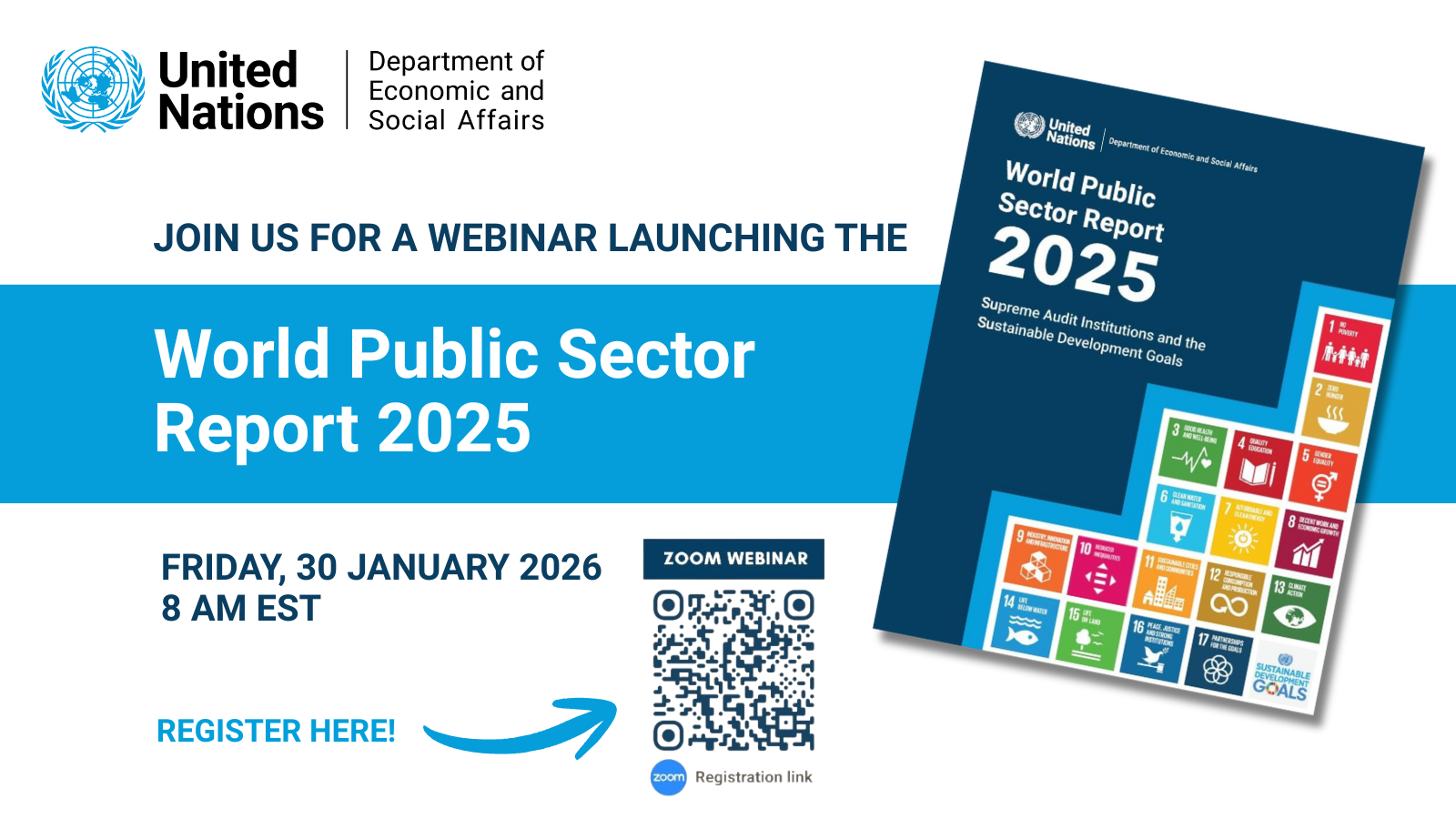
Webinar to launch the World Public Sector Report 2025

The World Public Sector Report 2025, published by the United Nations Department of Economic and Social Affairs (UNDESA), examines the role of SAIs in the implementation, follow up and review of the Sustainable Development Goals (SDGs).

The report highlights how SAIs are emerging as critical partners in advancing the SDGs. Through their audits, SAIs provide governments with evidence-based insights that strengthen accountability and accelerate progress toward inclusive and sustainable development.

Since 2016, SAIs have conducted hundreds of SDG-related audits, influencing national policies, laws and institutional arrangements. These audits have helped embed SDG priorities into governance frameworks and informed strategies for fiscal sustainability, equity and climate resilience.

The report’s launch webinar will comprise a presentation of the report, comments by public administration experts and a discussion.

It will start at 2 am on Saturday 31 January 2026 (NZT) so will likely be difficult to join live, but please register for a recording to be sent to you afterwards.

Collective Pacific voices on climate change action: Lessons from co-operative performance audits I Zoom webinar – 2 October 1 pm NZT


Climate change is a significant issue for Pacific nations. This webinar will spotlight the collaborative efforts of 9 Pacific countries participating in a global initiative to enhance climate adaptation through performance audits. These audits led by supreme audit institutions (SAIs) play a vital role in promoting public accountability and ensuring that significant investments deliver meaningful outcomes.

Join us as we explore common themes and findings from these audits, and hear from regional leaders about their impact and value in driving more effective climate adaptation strategies. This session is a great chance to learn how Pacific countries are working together to tackle climate change and make sure their efforts are effective.

The session will be chaired by our Secretary-General (and Controller and Auditor-General of New Zealand), Grant Taylor. Our panel will feature Finau Nagera, Auditor General of Fiji, and Junior Patrick, Auditor General of the Marshall Islands. Presentations will be given by Mike Scott, PASAI Program Director, and Karen Wong, Performance Audit Manager at the Office of the Auditor-General New Zealand.

Please register for this event. After you submit your registration, you will receive a confirmation email with your unique Zoom link and a way to add this to your calendar. If you have any issues, contact international@oag.parliament.nz.

We encourage you to forward this invitation to those you think may be interested in this event, all are welcome.

This event is led by the Office of the Auditor-General of New Zealand but forms part of our advocacy and good governance program.

Register for free, online course on auditing water issues

The National Audit Office of Estonia and the University of Tartu invite everyone interested in environmental auditing to sign up for a massive open online course (MOOC) on planning a performance audit on water-related issues.

The MOOC is:

  • free of charge

  • fully remote and self-paced

  • providing a certificate (1 ECTS) to those who pass all course tests successfully

  • starting from Monday 15 September 2025.

Guidance of the INTOSAI Working Group on Environmental Auditing as well as relevant experiences of SAIs from the European region have been used to develop course materials. While some sections of the MOOC are more Europe-oriented, the course is still relevant to SAIs from around the world.

Participants must register online.

26th PASAI Congress Communiqué


26th Pacific Association of Supreme Audit Institutions (PASAI) Congress
Nouméa, New Caledonia
26 to 29 August 2025

PASAI Communiqué

  1. PASAI held its 26th Congress in Nouméa, New Caledonia from 26 to 29 August 2025, hosted by the Territorial Chamber of Accounts of New Caledonia. The theme for the Congress was “Audit impact for improved accountability and transparency.” Representatives of 24 PASAI member national, state or territory government audit offices attended from American Samoa, the Australian National Audit Office, Australian Capital Territory (Australia), New South Wales (Australia), Victoria (Australia), Western Australia (Australia), the Cook Islands, the Federated States of Micronesia (FSM) National, FSM Chuuk, FSM Kosrae, FSM Pohnpei, Fiji, French Polynesia, Guam, Kiribati, the Marshall Islands, New Caledonia, New Zealand, Palau, Papua New Guinea, Solomon Islands, Tonga, Tuvalu and Vanuatu.

    Representatives attended from the Government of New Caledonia, the High Commission of the Republic in New Caledonia, the French Ambassador to the Pacific, the Pacific Community (SPC), the Armed Forces in New Caledonia, the French Development Agency, the Southern Province of New Caledonia, the Town of Nouméa, the University of New Caledonia, the Australian Consulate General, the New Zealand Consulate General, the Vanuatu Consulate General, INTOSAI General Secretariat, INTOSAI Capacity Building Committee (CBC), INTOSAI Development Initiative (IDI), the International Journal of Government Auditing, the New Zealand Ministry of Foreign Affairs and Trade (MFAT), the Australian Department of Foreign Affairs and Trade (DFAT), United Nations Development Programme (UNDP) Pacific Office and Certified Practising Accountants (CPA) Papua New Guinea.

    Audit impact for improved accountability and transparency

  2. SAI heads were encouraged by the opening address by President Alcide Ponga of New Caledonia, in which he expressed his view that in carrying out the fundamental tasks of transparency, responsibility and independent control, SAIs drive the improvement of public services and are essential for functional political systems.

  3. SAI heads agreed with the sentiments of the keynote address by the Deputy Director-General of the Pacific Community, Maria Fuata, that sustainable development is not possible without accountability and that in the Pacific, we must pursue the best value for every public program, initiative and service. SAI heads appreciated her recognition that PASAI’s robust system of monitoring, evaluation, reporting and learning (MERL) ensures all its efforts contribute to the achievement of its long-term vision.

  4. SAI heads appreciated the acknowledgement by the INTOSAI Secretary General and President of the Austrian Court of Audit, Dr Margit Kraker, of PASAI’s participation in the INTOSAI community. SAI heads noted her invitation to PASAI’s state and territorial members who are not already affiliate members of INTOSAI, to apply for this category of membership, if they meet the criteria. SAI heads noted the recent establishment of a working group on follow up audits.

  5. SAI heads noted the sentiments of the French Ambassador to the Pacific, the French Permanent Representative to the Pacific Community and Permanent Secretary for the Pacific, Véronique Roger-Lacan, that good governance models are maturing and citizens rightly have increasingly higher expectations of public accountability and transparency.

  6. SAI heads, along with all other Congress participants, concurred with the PASAI Chair’s expression of appreciation for the attendance of the INTOSAI Secretary-General; INTOSAI Capacity Building Committee Chair and Auditor General of South Africa, Tsakani Maluleke; INTOSAI General Secretariat Director, Silke Steiner; and IDI Manager, Benjamin Fuentes Castro.

    Solutions to challenges faced by SAIs in SIDS to adhere to international auditing standards

  7. SAI heads acknowledged the ongoing challenges to SAIs in small island developing states (SIDS) of budget constraints, staff recruitment and retention, sub-optimal infrastructure and remoteness. These constraints impact their ability to comply with international standards and sustain institutional knowledge.

  8. SAI heads noted collaboration and capacity building are key to mitigating the effect of these challenges. Regional and global partnerships provide training, shared tools (such as A-SEAT) and joint initiatives (such as cooperative audits) help overcome resource limitations. Other long-term solutions include investing in staff training, improving salaries whenever possible, succession planning and peer-to-peer partnerships between SAIs.

  9. SAI heads noted the demonstration and promotion of the impact of audit work to legislatures and the public builds support for the value of the SAI and hence supports the SAI independence value proposition. Discussions underscored the importance of advocacy and the impact achieved by adding PASAI’s voice to that of the SAI head.

  10. SAI heads noted the existence of AFROSAI-E’s model Public Audit Act which complies with INTOSAI’s 8 pillars of independence, is written to be accessible to non-legal practitioners and is available to use as a template when advocating for legislative change processes.

    Enhancing audit quality through regional collaboration

  11. SAI heads appreciated the message from the IDI’s Deputy Director-General & Head of Capacity Development, Archana Shirsat, who acknowledged PASAI’s support in working towards setting up a system of audit quality management (SoAQM) in 5 Pacific SAIs.  

  12. SAI heads noted that a commitment to quality management starts with a commitment to quality from the SAI head and should permeate everything a SAI does.

  13. SAI heads committed to the pursuit of audit quality in line with the international standards that pertain to their respective jurisdictions and noted that much expertise and support is available from IDI, PASAI, developed SAIs in the region and other partners, including for those required to comply with US auditing standards.

    Adding value to SAIs through audit impact

  14. SAI heads noted the formation and maintaining of coalitions with state and non-state actors is essential for optimal audit impact, which involves positive effects on people and planet, especially those left behind, or at risk of being left behind. SAI heads noted the IDI’s current development of a playbook on setting up robust audit follow-up systems.

  15. SAI heads concurred that selecting audit topics of value to people may not necessarily involve the largest amounts of money.

  16. SAI heads agreed that explaining audit work in plain language makes it more likely that recommendations will be implemented by public entities, legislators will provide appropriate oversight, the media will amplify the messages appropriately and citizens will engage with the findings.

    Strengthening collaborative work for SAIs and legislatures

  17. SAI heads appreciated hearing about the positive effects of the Jamaica Accountability Meter Portal (JAMP) by its Executive Director and Founder, Jeanette Calder, including the increase in whistleblower activity and public engagement with audit work.

  18. SAI heads noted audit quality, professional relationships with oversight bodies and audit impact are interrelated. Balanced, evidence-based reporting and a commitment to clear and accessible communication of their work builds trust and increases usefulness of the work of SAIs.

    SAI peer-to-peer (twinning) partnerships

  19. SAI heads celebrated the increased volume of twinning activity that is occurring within the region due to the funding made available by PASAI to activate new partnerships, in line with the commitment of the PASAI strategy 2024–2034 to increase the use of this capacity building approach.

  20. SAI heads witnessed the signing of a memorandum of understanding (MOU) between the SAI heads of Fiji and Western Australia.

    PASAI general business

  21. SAI heads noted the report of the PASAI Chief Executive on 2024–25 program activities and the Secretariat’s presentations on planned 2025–26 program delivery. SAI heads noted the Secretariat’s development of a comprehensive, multi-pathway training program.

  22. SAI heads noted progress on the IT audit platform (A-SEAT) project and an update about the creation of a gender equality, disability and social inclusion (GEDSI) advisory committee as committed to in the PASAI strategy 2024–2034.

  23. SAI heads adopted revisions to the PASAI Charter to enable PASAI to comply with new requirements of the New Zealand Incorporated Societies Act 2022 and thanked the PASAI Governing Board Charter amendment project sub-group for the open and consultative approach taken to bring the important changes to PASAI members.

  24. SAI heads acknowledged the service of the SAI Head of the Cook Islands, Desmond Wildin, for his chairmanship of the Governing Board since the last Congress in May 2024.

  25. SAI heads acknowledged the service of the SAI Head of Palau, Satrunino Tewid, who ended his term as Outgoing Chair. His contributions to the Governing Board include serving as its first Chair following its formation at the Palau Congress in 2009.

  26. SAI heads acknowledged the contributions to the PASAI community of the SAI Head of the Australian Capital Territory, Michael Harris, whose term of office will end before the next gathering of Congress, and those of SAI Australia secondee to SAI Papua New Guinea, Meegan Reinhard, whose extended secondment ends in September 2025.

  27. SAI heads confirmed SAI Guam to represent the Micronesian sub-region on the Governing Board and thanked Junior Patrick, SAI Head of the Marshall Islands, for his service on the Board.

  28. SAI heads confirmed SAI Solomon Islands to represent the Melanesian sub-region on the Governing Board, SAI Australia to represent the ‘Other’ sub-region on the Governing Board and SAI Tuvalu to represent the Polynesian sub-region on the Governing Board.

  29. SAI heads expressed their gratitude to the SAI Head of New Caledonia, her staff and the relevant local authorities for their generous hospitality in making such excellent arrangements to host the Congress.

  30. SAI heads expressed their gratitude for the funding support provided by PASAI’s core development partners for its programs and acknowledged the ongoing commitment from MFAT and DFAT.

    Host of the next PASAI Congress

  31. SAI heads supported the offer of SAI Nauru to host the 27th PASAI Congress in 2026.

Nouméa, New Caledonia
29 August 2025

PDF version of Communiqué

Companion paper to Secretary-General's final webinar available alongside recording

On 24 June 2025, after 7 years as the Controller and Auditor-General of New Zealand, Niue and Tokelau, and Secretary-General of PASAI, John Ryan shared in a webinar his reflections and thoughts about the public financial management (PFM) system in the Pacific. In the webinar he focused particularly on the challenges that Pacific SAIs face and what needs to be done so they can perform their roles effectively for the people of the Pacific.

This paper preserves much of what he expressed in that webinar and provides a resource for those working within, and with power to enable, the PFM system. It does this by suggesting where effort needs to be focused to strengthen the system. It also highlights our work supporting SAIs to address the issues they face. Finally, it presents insights on opportunities for others to partner with us to deal with weaknesses and improve accountability by Pacific governments to their people.

A recording of the webinar is also available. This, and other reports, are on our Regional reports page.

Pacific Island SAI heads invited to serve on the IDI Board

A vacancy (from mid-October) on the INTOSAI Development Initiative (IDI) Board must be filled by a SAI head from a developing country.

Eligible Pacific Island SAI heads are encouraged to submit expressions of interest by 31 July 2025.

There are more details about the role and the application process in the official invitation letter.


Current IDI Board Members


Last chance to register for tomorrow's webinar on effective engagement with the justice system

Communication is key to effective justice – effective engagement to ensure integrity and transparency

This webinar will seek to show the key to effective engagement with the wider justice sector from different perspectives.

Our Secretary-General, John Ryan, will chair the discussions. The panel will include the Director of Public Prosecutions in the Kingdom of Tonga, James Lutui Finau; Assistant CEO – Criminal and Civil Courts, Ministry of Justice and Courts Administration in Samoa, Tofilau Sina Faapoi; and the Director of the New Zealand Pacific Justice Sector Programme, Toli Sagaga.

This event is led by Office of the Auditor-General of New Zealand but forms part of our advocacy and good governance program.

Please register for this event to receive a unique login for the webinar. For any issues email international@oag.parliament.nz.

We encourage you to forward this invitation to those you think may be interested in this event – all are welcome.