

27th Pacific Association of Supreme Audit Institutions (PASAI) Congress
Republic of Naoero
25 to 27 August 2026
PASAI Communiqué
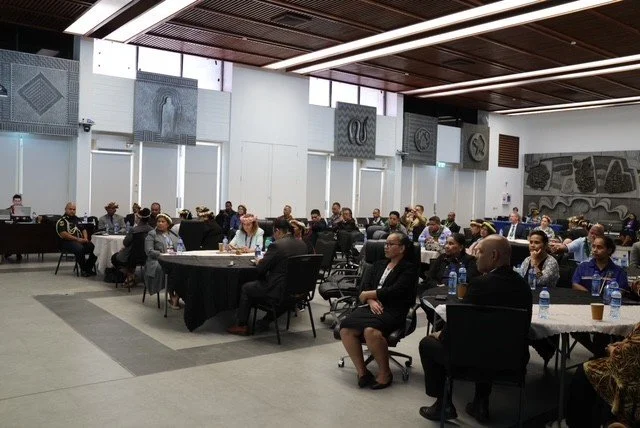
PASAI held its 27th Congress in the Republic of Naoero from 25 to 27 August 2026, hosted by the Department of Audit for Naoero. The theme for the Congress was “Sustainable audits for sustainable islands”. In addition to the host nation Naoero, representatives of 20 PASAI member national, state or territory government audit offices attended from American Samoa, the Australian National Audit Office, Australian Capital Territory (Australia), New South Wales (Australia), the Cook Islands, the Federated States of Micronesia (FSM) Kosrae, FSM Pohnpei, Fiji, Guam, Kiribati, the Marshall Islands, New Caledonia, New Zealand, Palau, Samoa, Solomon Islands, Tonga, Tuvalu and Vanuatu.
Representatives attended from the Government of Naoero, the High Commission of Australia, INTOSAI Development Initiative (IDI), the Audit Board of the Republic of Indonesia and the New Zealand Ministry of Foreign Affairs and Trade (MFAT).
Sustainable audits for sustainable islands
SAI heads appreciated the hospitality of the President and the opening address delivered by the Acting President of Naoero, the Honourable Charmaine Scotty MP, in which she highlighted the importance of government agencies embracing technology in responsible ways and in the interests of the public they serve.
SAI heads were encouraged by the sentiments in the keynote address by the Deputy Speaker of the Parliament of Naoero, the Honourable Isabela Dageago MP, that SAIs promote integrity, provide assurance that public resources are managed responsibly and help governments deliver better services.
SAI heads appreciated the acknowledgement by the INTOSAI Secretary General and President of the Austrian Court of Audit, Dr Margit Kraker, of PASAI’s value as a regional organisation. SAI heads noted increasingly global opportunities to exchange experiences and identify innovative approaches.
SAI heads acknowledged their regional strength of working collectively and resolved to explore further opportunities to share insights with each other to lift their offices’ ability to address emerging issues and enhance their sustainability.
SAI heads appreciated the contributions made by international and regional counterparts who participated in panel discussions by remote online attendance and/or by providing pre-recorded videos.
Auditing the use of AI and ethical use of AI in auditing
SAI heads noted the enormous potential of artificial intelligence (AI) to transform how SAIs deliver their mandates.
SAI heads concurred that public sector agencies, including SAIs, must strategically manage the risks of using AI.
SAI heads committed to lead by example in the responsible adoption and use of AI, noting that appropriate policies and staff training are essential for SAIs to maintain security and credibility.
Engaging meaningfully with the Legislature
SAI heads noted that SAIs and legislatures have integral roles in the accountability chain. SAIs provide independent assurance on public entity reporting and performance while legislative bodies use audit work to scrutinise the use of public funds and follow up on government implementation of audit recommendations.
SAI heads noted that SAIs need to maintain neutrality and independence while making themselves accessible and useful to legislative committee members. Increasing legislators’ understanding of their scrutiny role and building of their financial literacy benefits the people they serve.
SAI heads noted that legislative scrutiny is weakened by inactive oversight committees and the inability to publish reports until they have been tabled. Legislation that empowers SAIs to publish reports and mandates government response timeframes strengthens the Legislature’s ability to hold audited entities and the Government to account.
SAI heads noted that among legislators there may be low financial literacy and misconceptions about the role of the SAI and oversight committees. SAIs may be able to play a role in capacity building through new member inductions, briefings, study tours and advocating for the strengthening or clarification of standing orders.
Engaging meaningfully with communities, citizens and others
SAI heads noted that public engagement with audit work can amplify pressure to act on recommendations, giving additional incentives to SAIs to make audit findings easily understandable and accessible to citizens through media releases, non-technical summaries, videos and recommendation trackers.
SAI heads noted that citizen engagement may include community participation to strengthen audit relevance and impact. After taking into account experiences in other regions, SAI heads noted the use of appropriate safeguards so that citizens and CSOs can help identify issues and collect information while carefully managing awareness of roles, confidentiality, independence, conflicts of interest, training and safety.
SAI heads noted that citizen-centric reports, active communication and engagement with non-government stakeholders can promote public trust in a SAI and its role in the accountability system. Engagement also helps citizens understand that in most models, a SAI’s role is to provide assurance and recommendations, not prosecution or direct enforcement when issues are identified.
Auditing responses to climate change
SAI heads noted that climate change risks impact many government functions. Effective responses require strong governance, collaboration between agencies, and attention to long-term outcomes that are difficult to measure but critical for accountability.
SAI heads noted that the recent global cooperative performance audit in which 9 SAIs from the PASAI region participated, found government actions to adapt to climate change had the common issues of a lack of cross-agency coordination, insufficient long-term planning and weak monitoring. Pacific Island states urgently need access to further expertise and financing for actionable programs.
SAI heads noted the benefits of working together on cooperative audits include increased audit impact and strengthened technical skills for participants. PASAI will continue to use this model to support SAIs in planning and conducting audits that they would otherwise lack the resources to do alone.
Auditing achievement of SDGs
SAI heads noted the United Nations 17 Sustainable Development Goals (SDGs) provide SAIs a broad framework to undertake audits that contribute to assessing how effectively governments are progressing towards achieving their 2030 Agenda commitments.
SAI heads noted the IDI–PASAI supported cooperative audit on how governments are addressing skilled worker shortages involves 9 Pacific Island SAIs auditing SDGs linked to health, education and food security outcomes. The regional approach will help address challenges that include limited performance audit and stakeholder engagement capacity.
SAI peer-to-peer (twinning) partnerships
SAI heads witnessed the signing of a refreshed memorandum of understanding (MOU) between the SAI heads of the Australian Capital Territory and Kiribati.
SAI heads acknowledged the value of ongoing twinning partnerships and a desire to extend such arrangements where possible.
PASAI general business
SAI heads noted the report of the PASAI Chief Executive on 2025–26 program activities and the Secretariat’s planned areas of focus for 2026–27.
SAI heads noted the various forms of capacity development offered by the IDI as conveyed by its Deputy Director-General, Archana Shirsat. IDI and PASAI mutually acknowledged the close collaboration which has been successfully established and a desire to continue working together for the benefit of PASAI members.
SAI heads acknowledged the key messages that came out of the recent UNDESA Symposium and the IDI Global Summit for SAIs in Small Island Developing States. SAI heads also acknowledged the value of the A-SEAT audit management tool and noted the need for funding support to implement the broader rollout of the tool in the region.
SAI heads acknowledged the service of the SAI Head of New Caledonia, Florence Bonnafoux, for her role as Chair of the Governing Board since the last Congress in August 2025. In that time she actively participated in the comprehensive review of PASAI’s Charter and governance code, and drove the increase in transparency of Governing Board decisions with member SAIs.
SAI heads confirmed SAI Fiji to represent the Melanesian sub-region on the Governing Board and thanked David Dennis, the former SAI Head of Solomon Islands, for his service on the Board.
SAI heads thanked Imase Taai Kaunatu, the former SAI Head of Tuvalu, for her service representing the Polynesian sub-region on the Governing Board. SAI heads confirmed SAI Cook Islands to represent the Polynesian sub-region on the Governing Board, noting the value of the continued service on the Board of the former Outgoing Chair, Desmond Wildin.
SAI heads confirmed SAI Guam to continue representing the Micronesian sub-region on the Governing Board and SAI Australia to continue representing the ‘Other’ sub-region on the Governing Board.
SAI heads expressed their gratitude to the SAI Head of Naoero, his staff and the relevant local authorities for their generous hospitality in making such excellent arrangements to host the Congress.
SAI heads expressed their gratitude for the funding support provided by PASAI’s core development partners for its programs and acknowledged the ongoing commitment from MFAT and the Australian Department of Foreign Affairs and Trade.
Host of the next PASAI Congress
SAI heads supported the offer of SAI Solomon Islands to host the 28th PASAI Congress in 2027.
Republic of Naoero
27 August 2026