Auckland, New Zealand: A new report stresses the importance of well-organised government action on climate change, acknowledging its existential threat to the Pacific communities who have contributed little to global greenhouse gas emissions.
The Pacific Association of Supreme Audit Institutions (PASAI) has published the regional analysis of assessments looking at whether governments in 12 Pacific Island states have the governance arrangements, public policies and climate finance systems they need to support climate action.
The ‘ClimateScanner’ assessments were completed between 2024 and 2025 by the government audit offices of American Samoa, the Federated States of Micronesia, Fiji, Guam, the Marshall Islands, New Zealand, Palau, Papua New Guinea, Solomon Islands, Tonga, Tuvalu and Vanuatu.
Globally, more than 100 audit offices have used the ClimateScanner assessment tool, supporting transparency about governments' actions to address climate change.
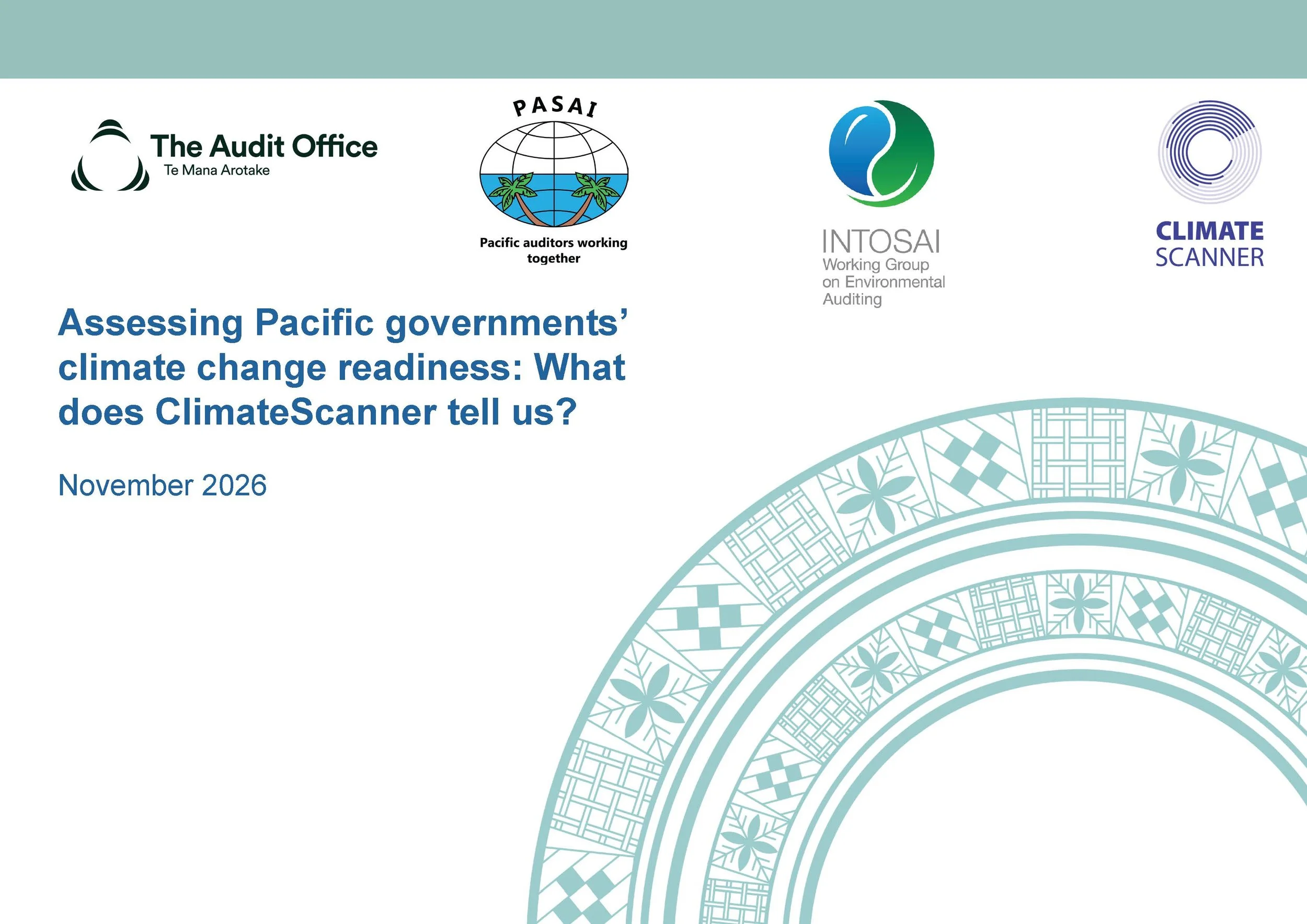
The regional report, Assessing Pacific governments’ climate change readiness, combines the insights from the 12 Pacific Islands ClimateScanner assessments to provide an overview of how governments are responding to climate change, the strengths of those responses and the common challenges that exist.
PASAI Program Director and contributor to the report, Karen Wong explained, “The report’s findings show that many Pacific Islands have many of the governance and policy foundations needed to respond to climate change.
“Turning these good foundations into results requires strengthening access to meaningful finance and enabling climate initiatives to be adequately resourced, managed and implemented.”
The report highlights the following priorities:
Strengthen climate finance systems, including by mobilising finance (particularly from the private sector) and improving financial monitoring and reporting.
Use monitoring information more systematically to understand how well key climate laws, policies and strategies are being implemented and what improvements are needed.
Build workforce and institutional capability to support these areas.
PASAI Secretary-General and Auditor-General of New Zealand, Grant Taylor, encouraged Pacific governments to consider and use the report’s findings as they strengthen climate change readiness and build capability where needed.
“I also encourage Pacific audit institutions to use these findings to help inform future audits of how effectively governments are implementing climate actions,” he said.
The launch of the regional report coincides with a ClimateScanner summit in Rio de Janeiro, Brazil on 5 and 6 November 2026. Heads of government audit offices, experts and partners are attending the summit, themed, ‘From Data to Action’.
The regional report was produced with support from The Audit Office New Zealand and the INTOSAI Working Group on Environmental Auditing, and is available from pasai.org/regional-reports.
PASAI acknowledges the support of the New Zealand Ministry of Foreign Affairs and Trade (MFAT) and the Australian Department of Foreign Affairs and Trade (DFAT).
----END----
Contact information:
Karen Wong, Program Director PASAI
E: karen.wong@pasai.org P: +64 9 304 1275
PDF version of this media release