
By Karen Wong, Program Director, PASAI
I'm just back from this year’s International Meeting of Performance Audit Critical Thinkers (IMPACT 2026) with many ideas of how to do better performance audits. There was a lot of AI talk, but what stuck with me was more basic: how do we do more impactful performance audits and what skills will performance auditors need in the future?
I work with audit offices across the Pacific, so I know many of you have small teams and tight budgets. The good news is that most of what I heard doesn't need extra staff or fancy systems.
Making sure your audits lead to change
Ten years ago, Grant Hehir, the Auditor-General of the Australian National Audit Office, challenged performance auditors to look at impact, not just whether a program was implemented. A recent review by the Victorian Auditor-General’s Office of 750 performance audit reports found little has changed. Agencies often can't show us how they made a difference.
One of the biggest challenges is the lack of good outcome data. One suggestion I liked was to think about useful proxies. Look at indicators similar organisations use, or data another agency already holds. They may not be perfect but may still to provide useful information.
Andrew Greaves, Auditor-General of Victoria, also presented data showing that almost 100% of audit recommendations are accepted, but agencies only act on a third (or less) within their own timeframes. Are we doing enough to make sure recommendations make a difference? I think we can do more by working alongside agencies to help them understand and act on our recommendations, rather than just handing them over. Management action stays with them, but we can help them more to get there.
Ask why, not just what
Iain Murray from the Chartered Institute of Public Finance and Accountancy (CIPFA) talked about moving from being an examiner to an explorer. That means asking why something happened and what is driving performance, not just whether it met the criteria.
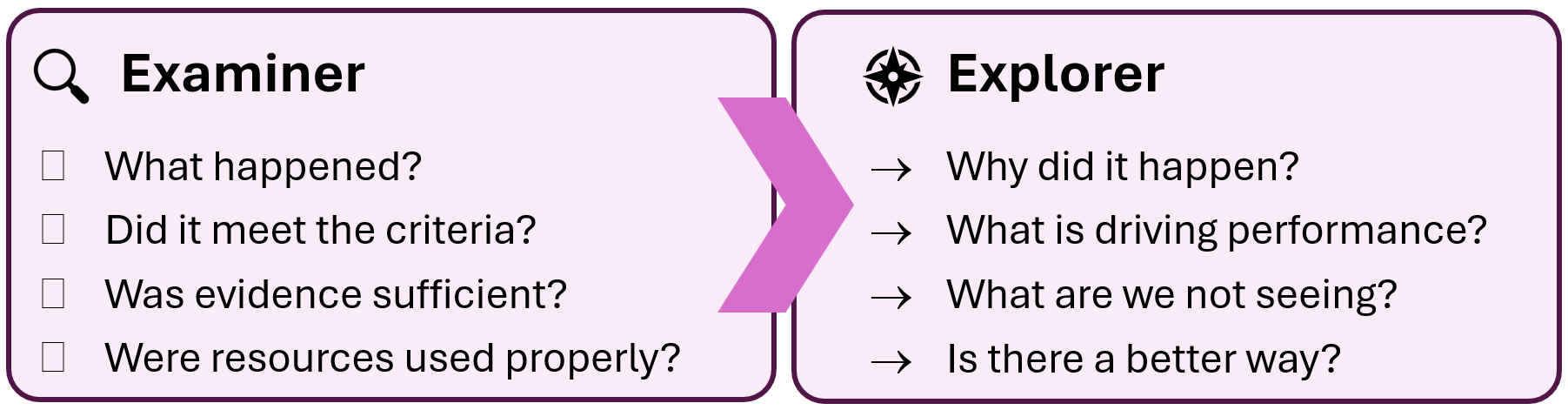
Recreation of a CIPFA presentation slide
Auditor General of Canada Karen Hogan suggested asking, "Why isn't meaningful change happening?" rather than, "What progress has been made?" Looking across several programs instead of just one also shows up the problems that sit underneath all of them. This is just about asking a better question and doesn’t require more resources.
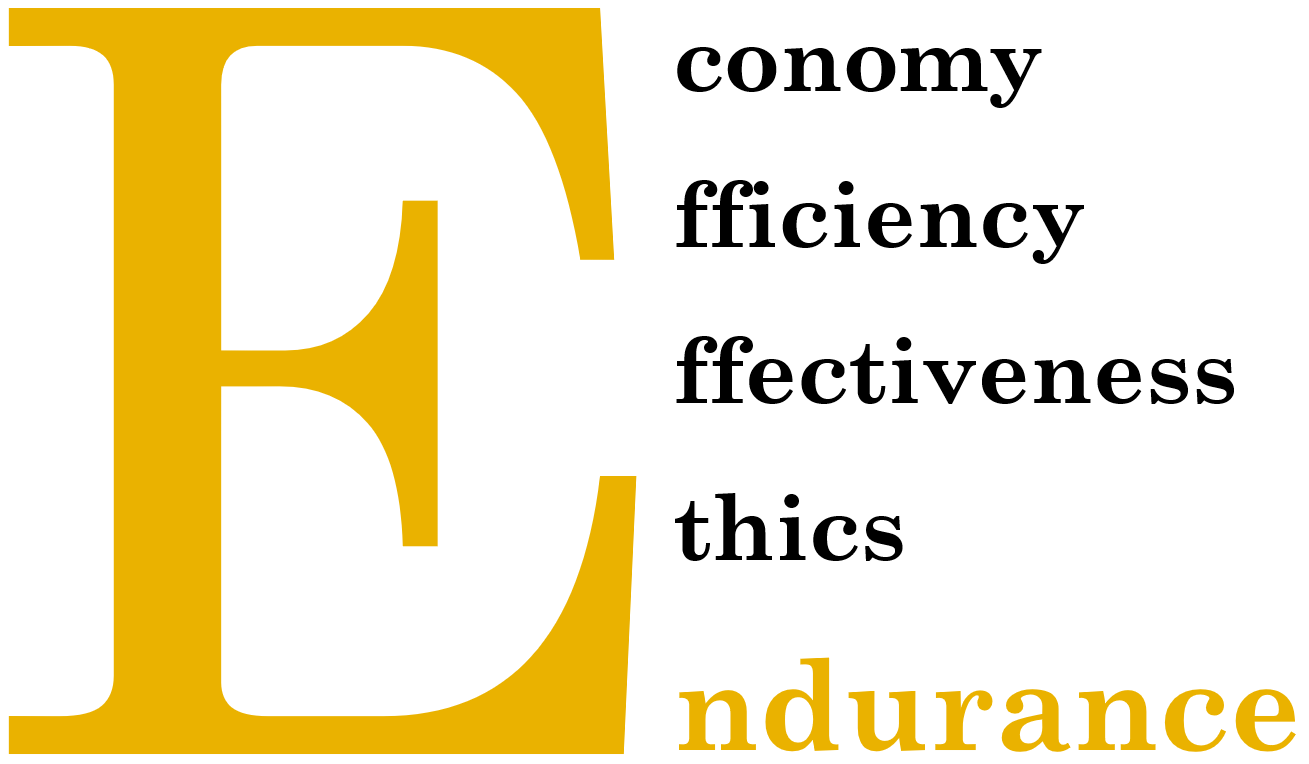
The fifth “E”
Ensuring there is value for money
Fiscal pressure is real, so economy and efficiency need to be more prominent in audits. Along with this, Australian Auditor-General Caralee McLiesh suggested adding a fifth "E", endurance. A cheap solution that doesn't last isn't value for money. Applying a value-for-money test of whether the benefits outweigh the costs to our own recommendations is also useful.
Tell the story well
The journalists' advice was simple. Know your audience, write plainly, stay curious and leave your assumptions at the door. Be clear about what we can say with confidence and what we don't know. Link findings to the people affected. An audit also only makes a difference if people read it and act on it.
The skills that matter most
Performance auditors are now working in environments with more complexity, tighter fiscal constraints, higher public expectations, and more volatility and change. Changes in data and technology will expand the evidence available but will also increase risk.
Technical skills will still count, but automated systems may do more of that work. The skills that will matter most are human ones: curiosity and judgement, systems thinking, adaptability and being able to communicate for impact.
Small teams can build these skills through how we coach each other, ask questions and review each other's work.
AI: It still takes people, and it also needs safeguards
One of the best things I heard on AI was to start with the problem, not the tool. Automation can give us evidence faster, and let us look across a whole system, which is hard to do by hand. But it's people who turn that evidence into change. Innovation isn't just about the technology.
Training, governance and managing the risks also need to grow alongside the use of AI. For a small office, that could be simple. Which tools can staff use? What information can go into them? Is a person still checking the result? Checking your wording with AI is very different from using it to help with analysis, so the safeguards may need to match.
IMPACT 2026 gave me a chance to hear different views on performance audit, pick up new ideas and see what other offices are doing. I'd be interested to hear which of these ideas stand out to you.
And if you'd like to keep learning from other Pacific performance auditors, our webinar series on performance audit is a good way to do it. The next one is in February 2027, and we'd love to see you there.